

October 7, 2026
EuroMAB 2026 – Interwoven Futures
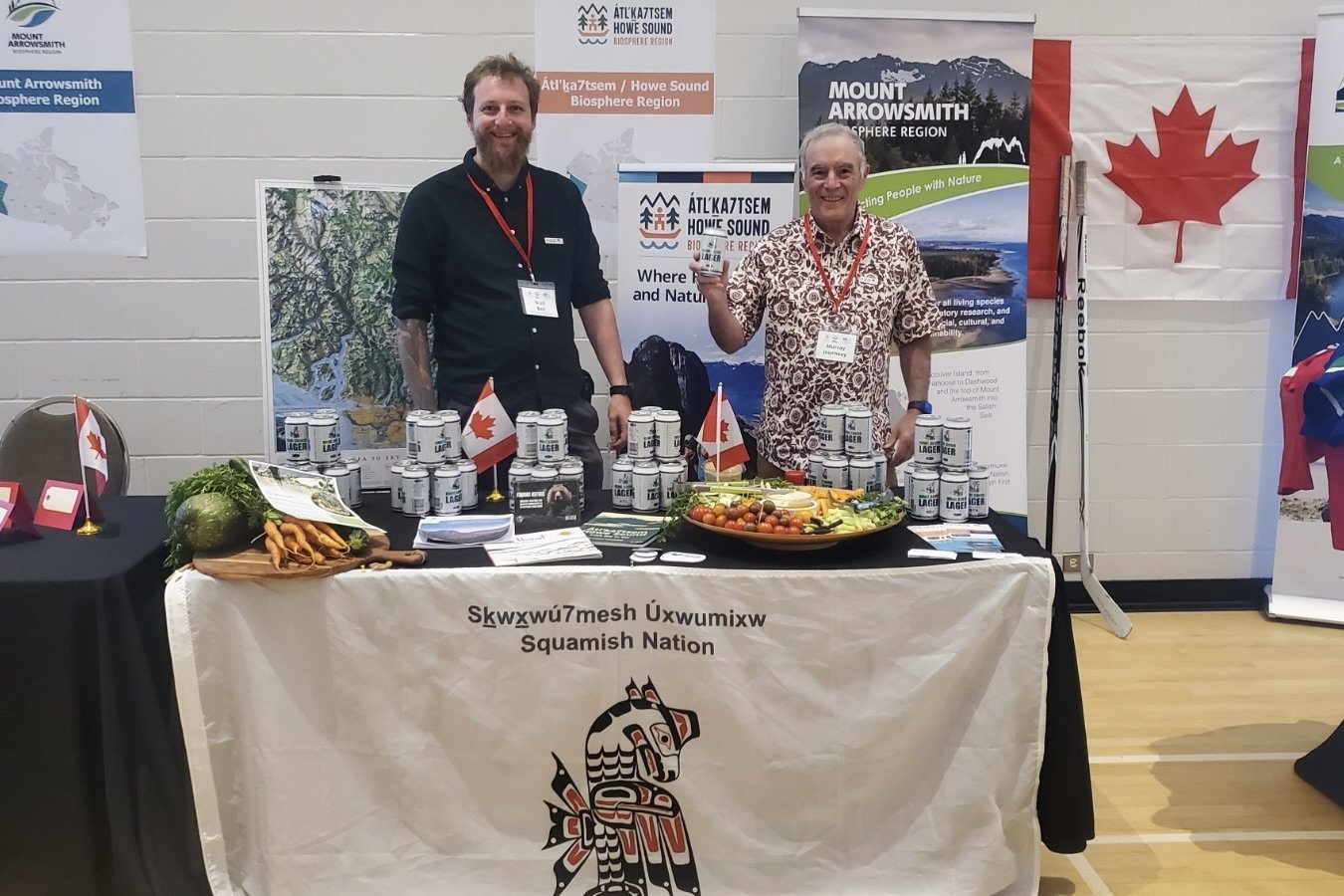
Squamish sits at the heart of the Átl’ḵa7tsem / Howe Sound Biosphere Region, and as such, much of our work contributes directly to the goals of the Biosphere Region. Every two years, the geographic network of Biospheres from Europe and North America meets for the EuroMAB conference: five days packed with all things ‘biosphere’. This year, I (Niall Bell, Director) attended EuroMAB 2026, hosted by the Mount Arrowsmith Biosphere Region on Vancouver Island, with Murray Journeay (Director), colleagues at the Átl’ḵa7tsem / Howe Sound Biosphere Region Initiative Society (AHSBRIS) and representatives from Sḵwx̱wú7mesh Úxwumixw (Squamish Nation). We spent the week sharing our work on biodiversity assessment and connectivity modeling, and learning more about the challenges and successes of other Biospheres from around the world.
Interwoven Futures
The theme for 2026 is Interwoven Futures: Co-creating sustainability with nature and communities. The core of this theme focuses on the interrelationships between the work nature conservationists are doing in regions across the world, and the communities that live and work there.
Throughout the week we heard stories from a range of people, all with different backgrounds, about how their communities are working to live sustainably alongside nature. I attended a workshop hosted by the Rhön Biosphere Reserve in southern Germany which shared success stories about food production in their Biosphere Reserve. They shared work on a certification scheme which allows producers and manufacturers to prove to their customers that their products are produced entirely in the Biosphere. This supports local suppliers and manufacturers, shortens supply chains, and places emphasis on sustainable agriculture.
A strong emphasis was placed on how young people interact with Biospheres at all levels, and reiterated their place in the wider sphere of Biosphere governance and decision making; a theme I was particularly pleased to see given my status of ‘Youth’. We heard from Dr. Antonio Abreu (MAB Programme Secretariat, UNESCO) who spoke about the importance of allowing young people to be a part of Biosphere governance, and how it is critical that this is implemented in such a way that their inclusion is not a token, and instead represents equal responsibility in the program. Biospheres were encouraged to nominate youth ambassadors, and to bring them into their governance structures.
As a member of Nature Squamish’s board of directors, I’m privileged to see all of the amazing work being carried out in our area concerning nature conservation. When attending a workshop by members of the Pilis Biosphere Reserve in Hungary, I felt I was able to appreciate the amount of hard work and dedication it takes to run several complex and long-running monitoring programs. Among those programs the work with wildcats stood out to me. We learned about this cross-border initiative (with Slovakia) to support the recovery of wildcats across the region. This conservation program is multifaceted but includes wildlife camera monitoring and reintroduction, among other conservation actions. It stood out as a reminder that nations working together can achieve more than working alone – all of our futures are interwoven.
Cultural Evening
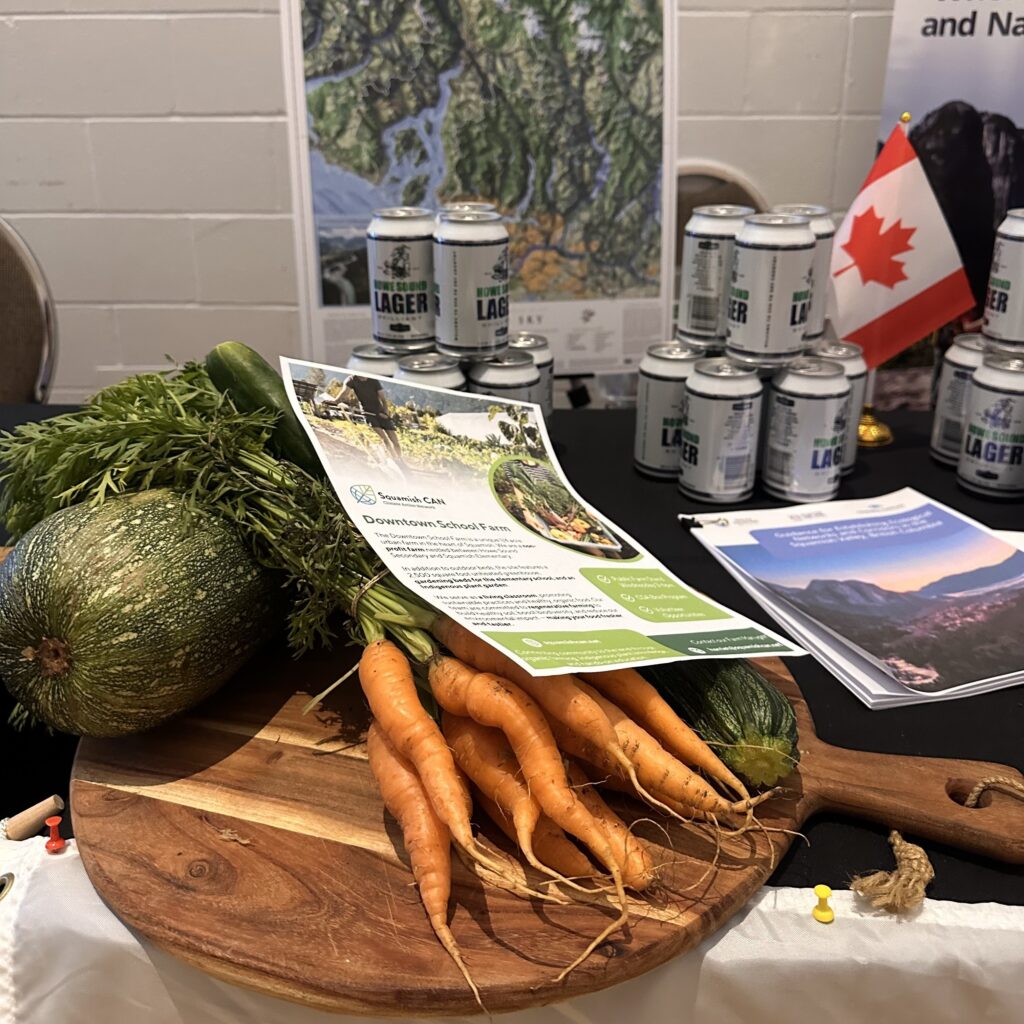
Alongside representatives from the Sḵwx̱wú7mesh Úxwumixw (Squamish Nation), Murray and I supported the AHSBRIS in presenting produce from our Biosphere Region, including one of many locally brewed beers. The cultural evening tasked each of the 20 Canadian Biosphere Regions to host a table of local foods and products; the best of Canadian Biospheres!
Throughout the evening, we tasted foods from around Canada, including incredible beef jerky from Waterton Biosphere Region, tasty cheeses from Mount Arrowsmith, and the sweetest maple syrup cones from Quebec. After the initial rush we watched a production by xe’xe productions called hwiitsus lhqelts (jealous moon). I’m fortunate to have been able to listen to many representatives from First Nations, including at EuroMAB, but I’ve never before watched a performance like this. We learned that, through these performances, members of local Indigenous Peoples are given the space and mentorship to learn and practice their ancestral language and stories. It was a pleasure to watch and learn from their performance, and witness the strong connection with their Indigenous culture.
Following more bustle, food, and beer, the cultural evening descended into a party and that’s when I took my cue to leave. The evening was a rich experience, especially for someone who has only experienced one small corner of Canada.
Field Trips
During the week, participants were invited to take part in field trips to locations in Mount Arrowsmith Biosphere Region. Naturally I gravitated to the trip which involved wildlife. We visited the North Island Wildlife Recovery Centre, a charity with a mission to rehabilitate injured wildlife and release them back into the wild. Animals that sadly cannot be released, such as a blind raven, are kept at the centre on display for the public to learn about these amazing animals. This centre is one of only a handful in BC that have the permits to accept and rehabilitate black bears. While in care, the bears are kept away from humans to prevent habituation.
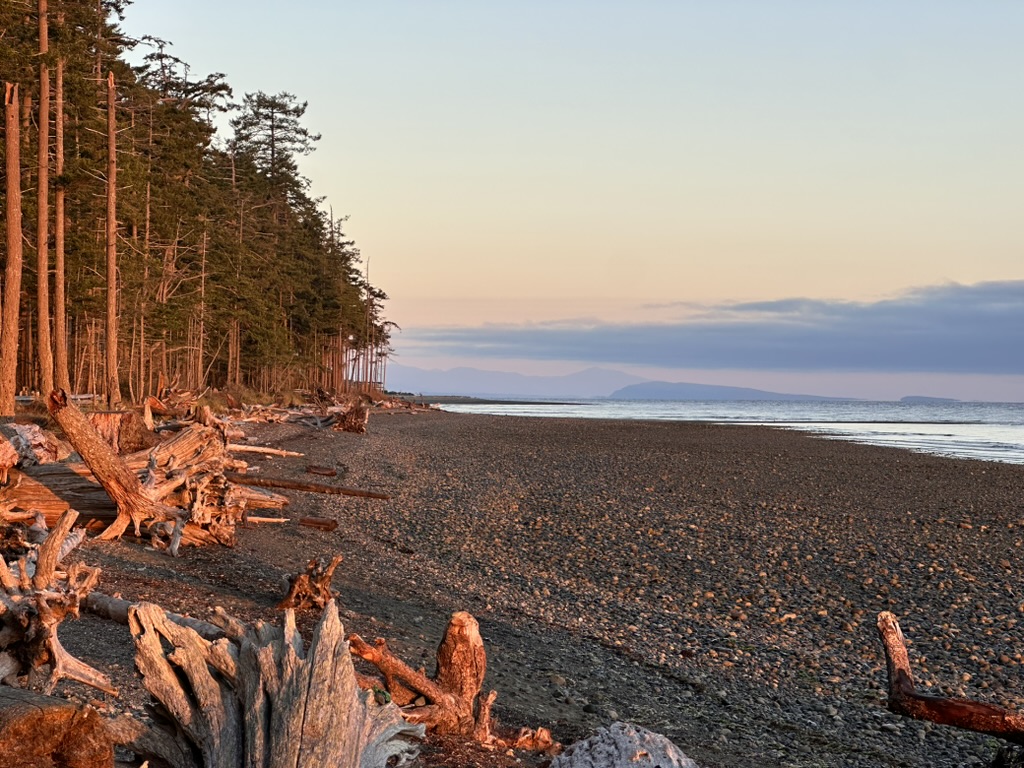
On the trip we met some characterful creatures, including a raven living with an autoimmune disease who offers pieces of food to wild ravens in return for shiny trinkets. To close out the day, our group headed to Rathtrevor Provincial Park to walk on the beach and take in the fresh air.
Key Takeaways
I went into EuroMAB 2026 with a basic knowledge of what I thought Biosphere Regions/Reserves are about. I came out with a completely different understanding of how they work, and what they mean in the global context of nature conservation and sustainable development.
So for those of you who are maybe unaware of what it means to live and work in a Biosphere, here are my key takeaways:
- Biospheres are not just about a defined boundary of protected lands. They are about collaboration, experimentation, and a passionate drive towards living sustainably and coexisting with nature and wildlife. I had neglected to appreciate the contribution businesses, be it ‘green’ or otherwise, bring to the Biosphere.
- Living in a Biosphere is something to be proud of. Your day-to-day work can make a difference to the lives of people and nature around you, and by thinking in the context of Biosphere Regions, we can all work towards sustainable lives.
- Each and every one of us living in a Biosphere has the opportunity to contribute to a living laboratory of sustainable development. Your ideas and actions make a difference.
Last but not least, I wanted to thank Murray for sharing a camp site; putting up with my constant desire to go birding; frequently interrupting conversations because ‘I’m sure that was a horned owl!’; and for many hours around a camp fire brainstorming ideas for how we can continue to develop and improve communication of the output of our biodiversity assessment and connectivity modeling work.
If you’re interested in learning more about the Átl’ḵa7tsem / Howe Sound Biosphere Region, check out their website. If you’d like to learn more about our landscape-scale modelling and mapping work, visit EcoScapes.
Niall