

August 28, 2026
Understanding Bald Eagles
The name bald eagle comes from the old English word “balde,” meaning white—not hairless. Its scientific name, Haliaeetus leucocephalus, means “white-headed sea eagle.” In the Sḵwx̱wú7mesh (Squamish) language, the word for bald eagle is spʼáḵwʼus.
Identification
People often wonder if the juvenile bald eagle is a golden eagle.
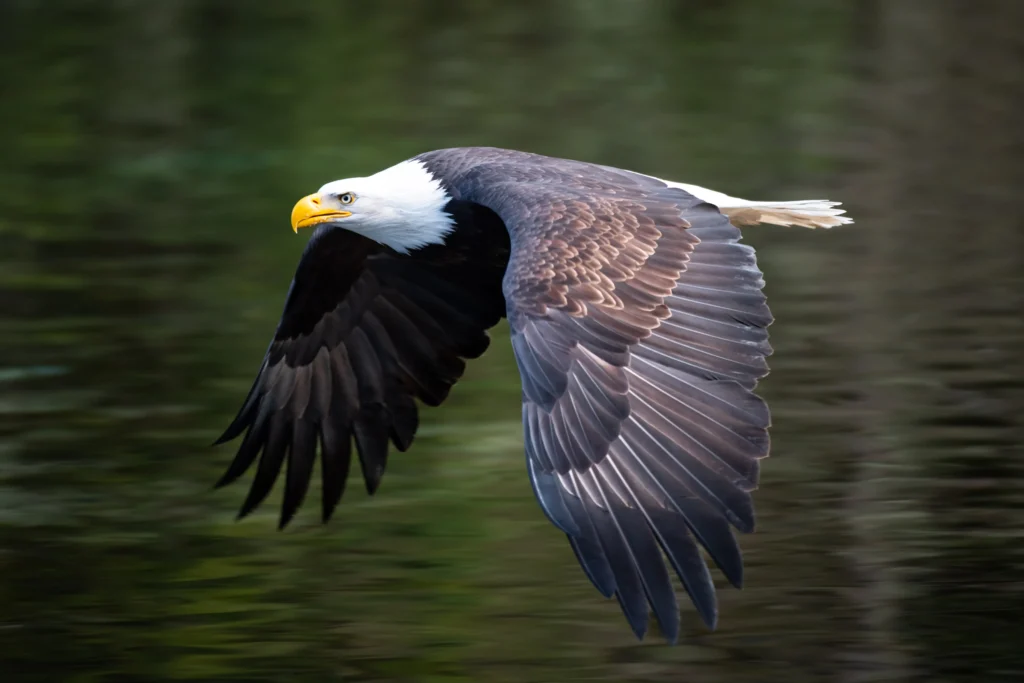
Mature eagles have a white head and tail, uniformly brown body, yellow eyes, beak and claws. Eagles reach maturity at 4 to 5 years.
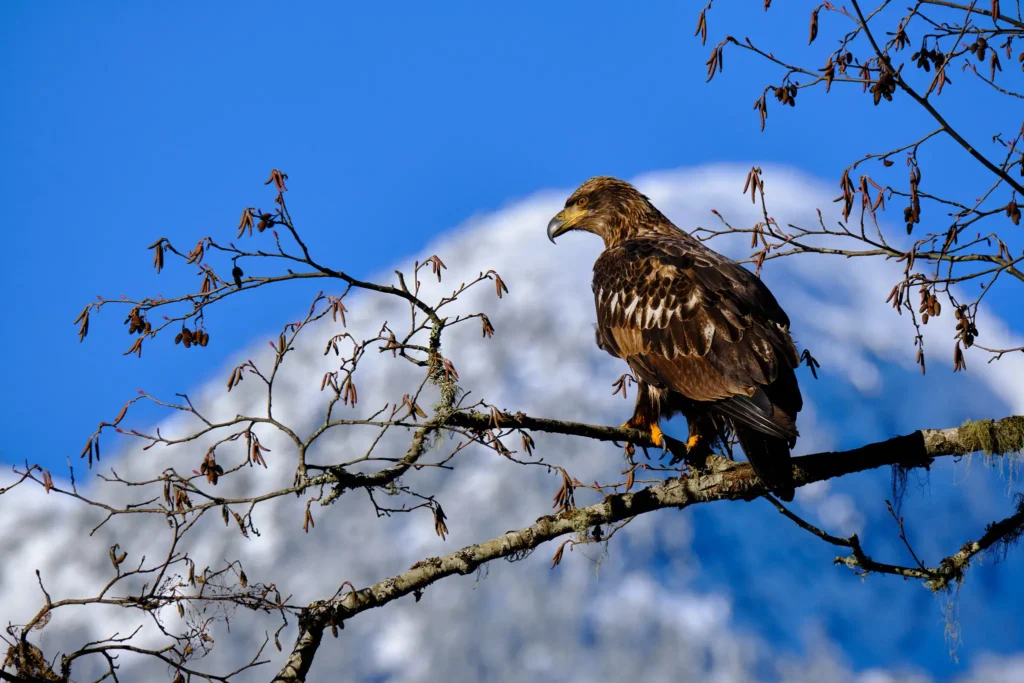
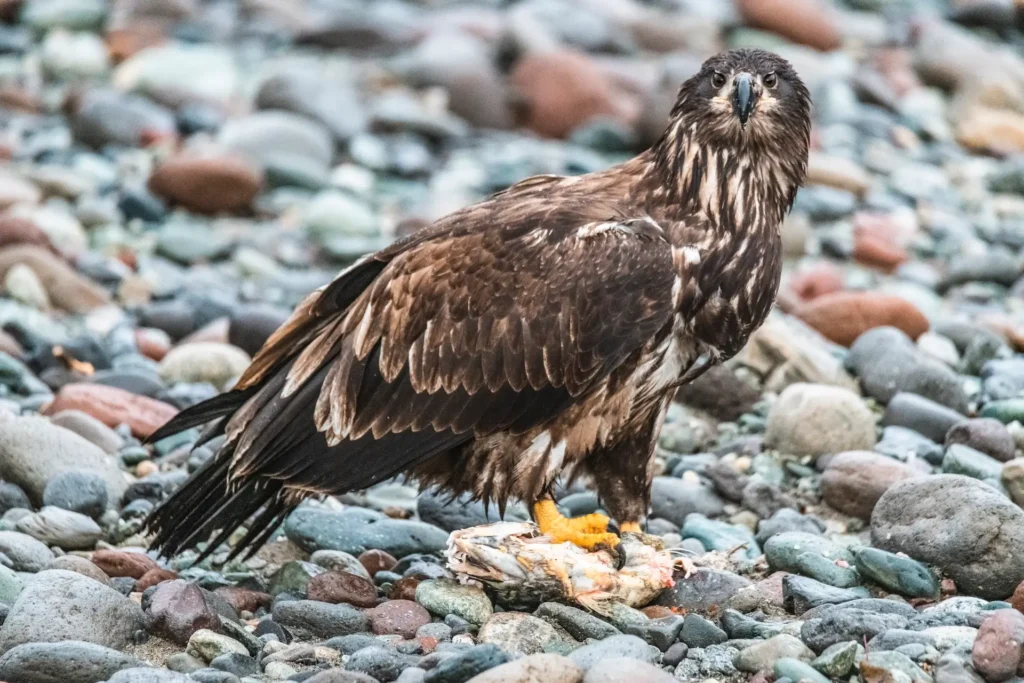
Immature bald eagles have a mottled brown appearance.
Eagle Eye – Able to see the glint of a herring at ½ km, eagles’ eyes are 8 times sharper than a human’s with 20/20 vision.
Power Beak – Hooked and self-sharpening, this meat-tearing tool is used tenderly in courtship.
Feather-Light Bones – Hollow bones weigh less than half the weight of the eagle’s 7,000 feathers.
Designer Feet – Large, strong feet have tiny spikes that grip slippery fish.
Flight Control – Tail feathers can be tilted or spread to function as a rudder or brake.
Weight – Up to 6.8 kg (15 lbs), the weight of a six-month child.
Height – About 1 meter (3 feet), the height of a kitchen counter top.
Wingspan – About 2 meters (6 feet), greater than the reach of an adult’s arms.
Lifespan – 15 to 30 years in the wild.
Flying speed – About 70 kmh (40 mph), faster than the city speed limit.
Diving speed – 160 kmh (100 mph), faster than cars on the freeway.
Individual eagles. Death is commonplace for young eagles. Only one in ten reaches four years of age. Fifty percent of eagles die in their first year. Mastery of survival skills such as hunting and finding food sources, as well as luck, determines which individuals survive to adulthood.
Eagle Population. From an estimated 500,000 in 1600 AD to a low of less than 50,000 around 1960, bald eagle populations are now increasing. By the 1960’s, there were few bald eagles in the United States’ lower 48 states. Eagles were still numerous in British Columbia and Alaska.
Population Declines from Human Activities
Hunting – Hunting played a large part in early population declines. As recently as 1962, bounty hunters were paid $2 for a pair of eagle feet. Today poaching continues even though the birds are legally protected.
Habitat Loss – Urban development and industrial activities often result in the loss of large trees and degraded salmon habitat. This increasingly threatens eagle populations.
Distraction & Disturbance – Too much human activity too close to the eagles during feeding, resting and nesting threatens their survival.
Pesticides and Pollution – Pollution interferes with the eagles’ ability to reproduce. For example, eagles eat waterfowl that have ingested lead shot. The lead often proves fatal to eagles.
Are Eagles in Squamish Year-round?
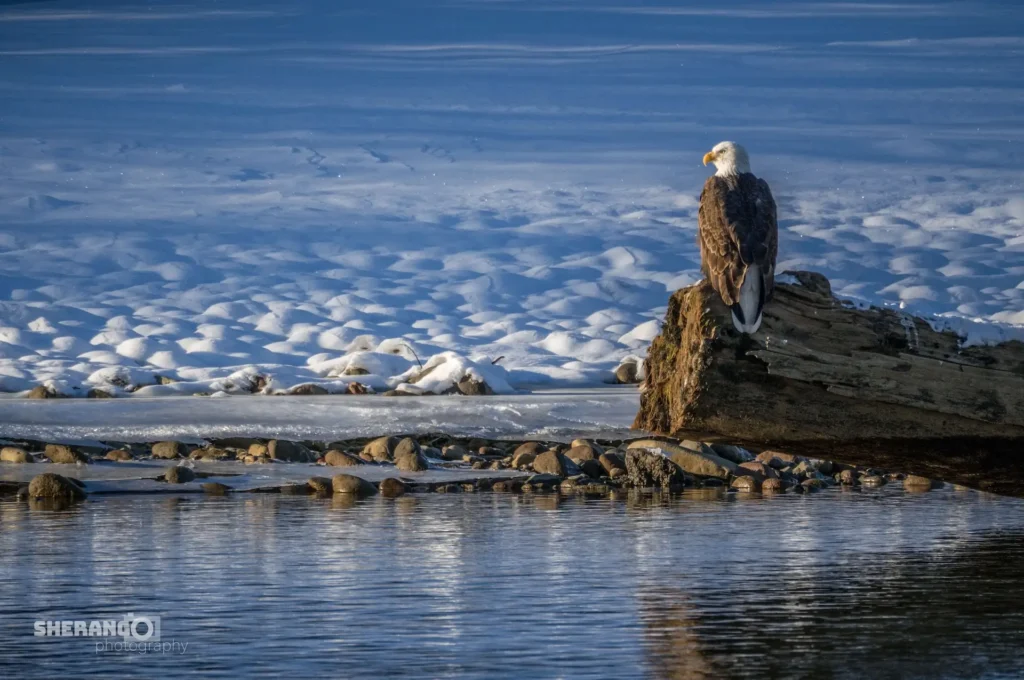
Yes, and no. In summer, there are a few pairs of eagles that nest and raise their young in the Squamish area. Larger concentrations can be found on the Gulf Islands as there is more plentiful summer food. Most lakes and rivers in North America host nesting bald eagle pairs.
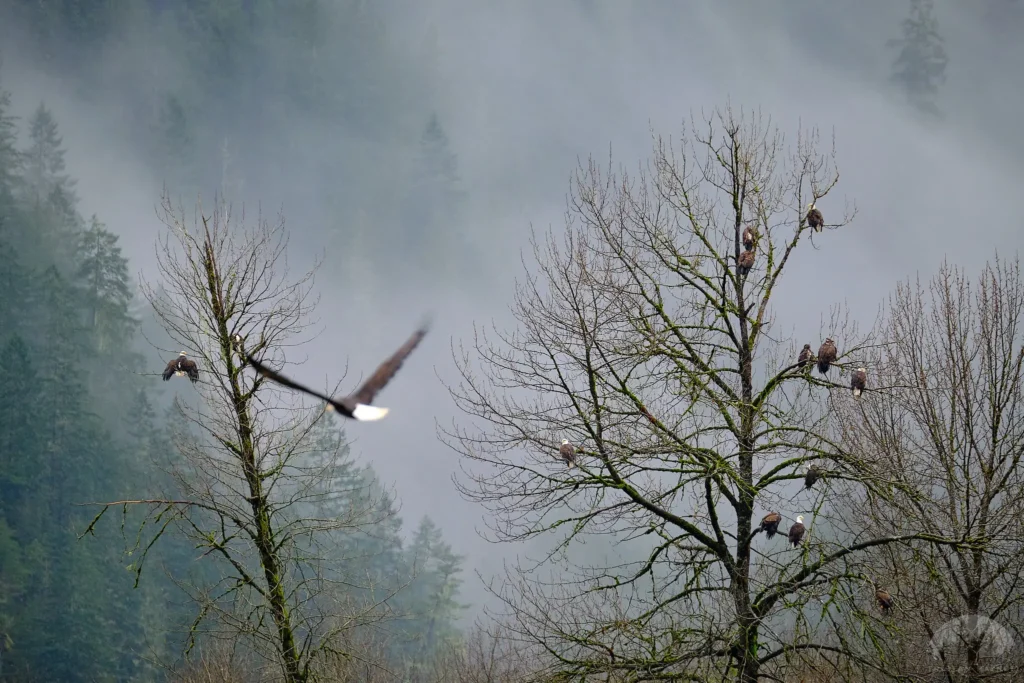
The eagle spectacle in Squamish is a winter phenomenon. During the eagle count in 1994 there were 3,471 bald eagles counted along the Squamish river. Other important gathering spots for wintering eagles are along the Chilkat in Alaska, the Harrison in B.C., and the Skagit in Washington State. All these rivers have important salmon runs that bald eagles depend on to survive the winter.
An estimated 70% of bald eagles are found in British Columbia and Alaska. Eagles banded in Alaska and Montana have been seen in southwestern British Columbia. Many, but not all, bald eagles are great travelers.
For more information, please visit the Eagle Viewing Shelter at Eagle Run dike in Brackendale, B.C. Canada. You will find a series of interpretive panels that explain the life cycle and importance of the eagles. EagleWatch volunteers conduct twice-daily counts from the dike, from early November until early January.
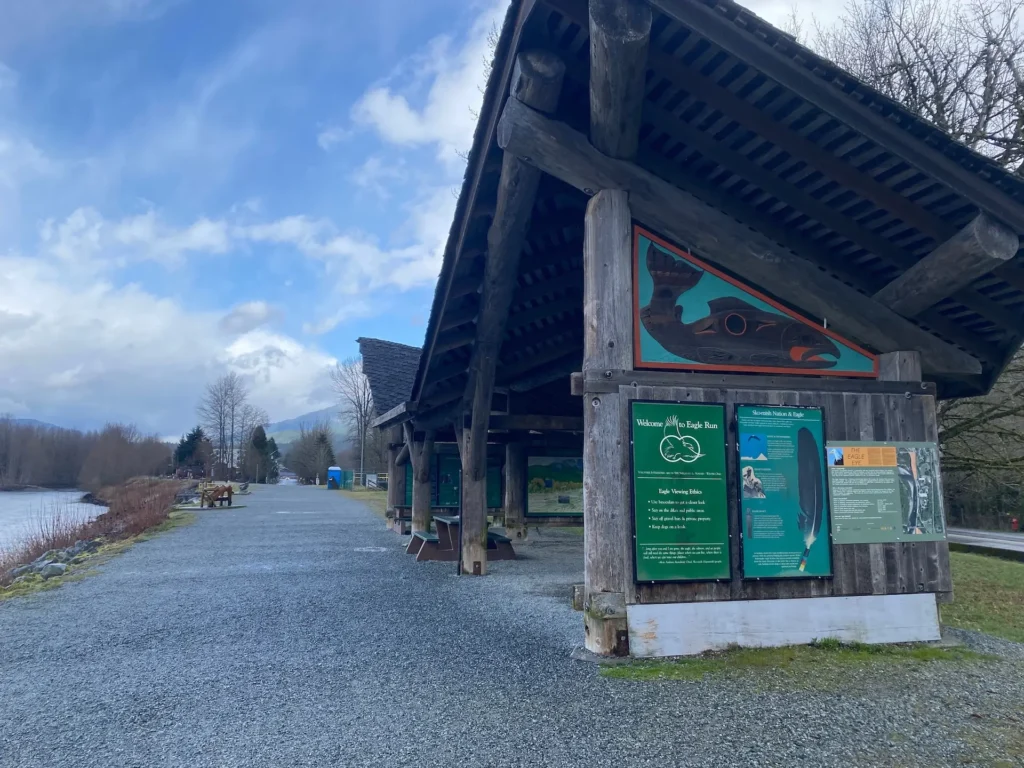
Eagle Viewing Ethics
- Please give eagles space
- Use binoculars or a zoom lens to get a closer look
- Do not use drones for photography
- Stay on dikes and public property
- Stay off gravel bars and private land
- Keep dogs on a leash

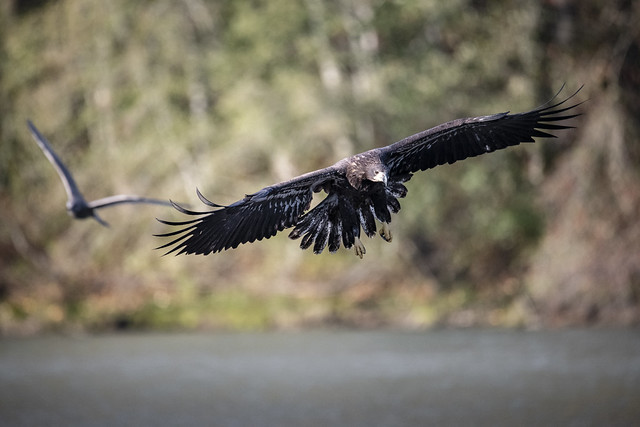


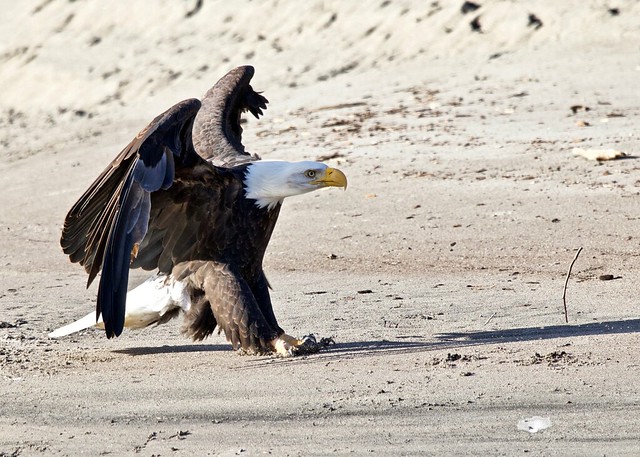


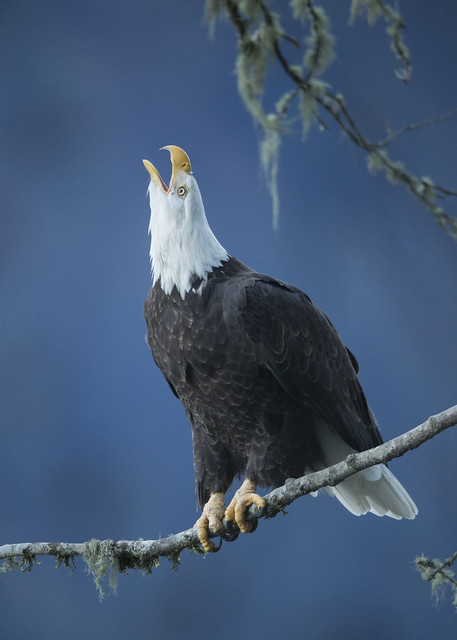


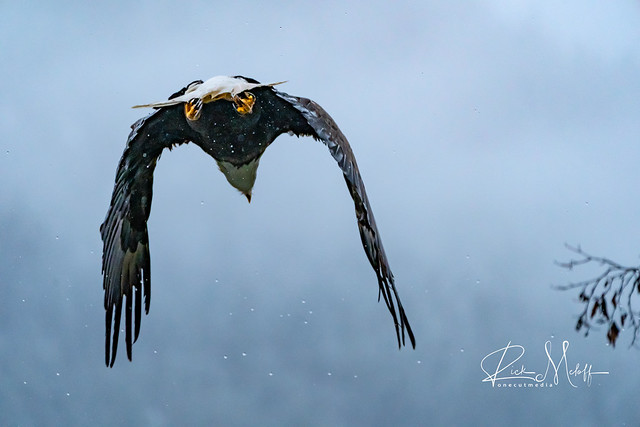


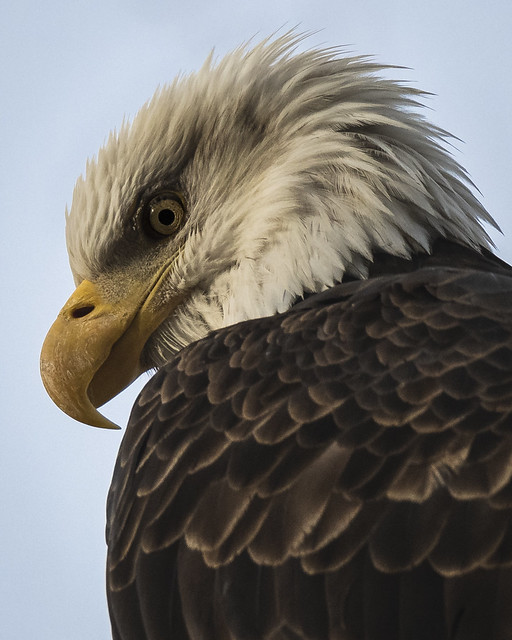
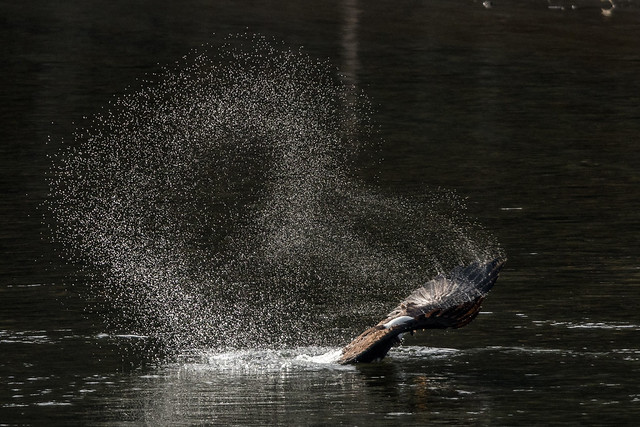
Photo Credits: Banner image, Tristan Rayner. Inline images, Brian Aikens, Tristan Rayner, Yohann Chaplin, Chris Elkins, Rachel Shephard